

As many readers know, ahead of the 2024-25 seasons the NCAA changed the rules around 2nd contact. They basically got rid of doubles unless the ball went over the net. I did a quick analysis of the impact of this rule change in the women’s game following their season.
The NCAA men made the same rule change, and then FIVB experimented with it over the Summer at VNL and in Beach events. They liked it, so now basically everything is going in that direction.
Back in May I started work on a proper academic analysis of the impact of the rule change. That peer-reviewed paper has now been published in the Journal of Sports Sciences, one of the leading academic journals in the field. You can read the full article here:
👉 Impact of the Second-Contact Rule Change on Setter Performance, Referee Home Advantage, and Rally Dynamics in NCAA Volleyball
What I found
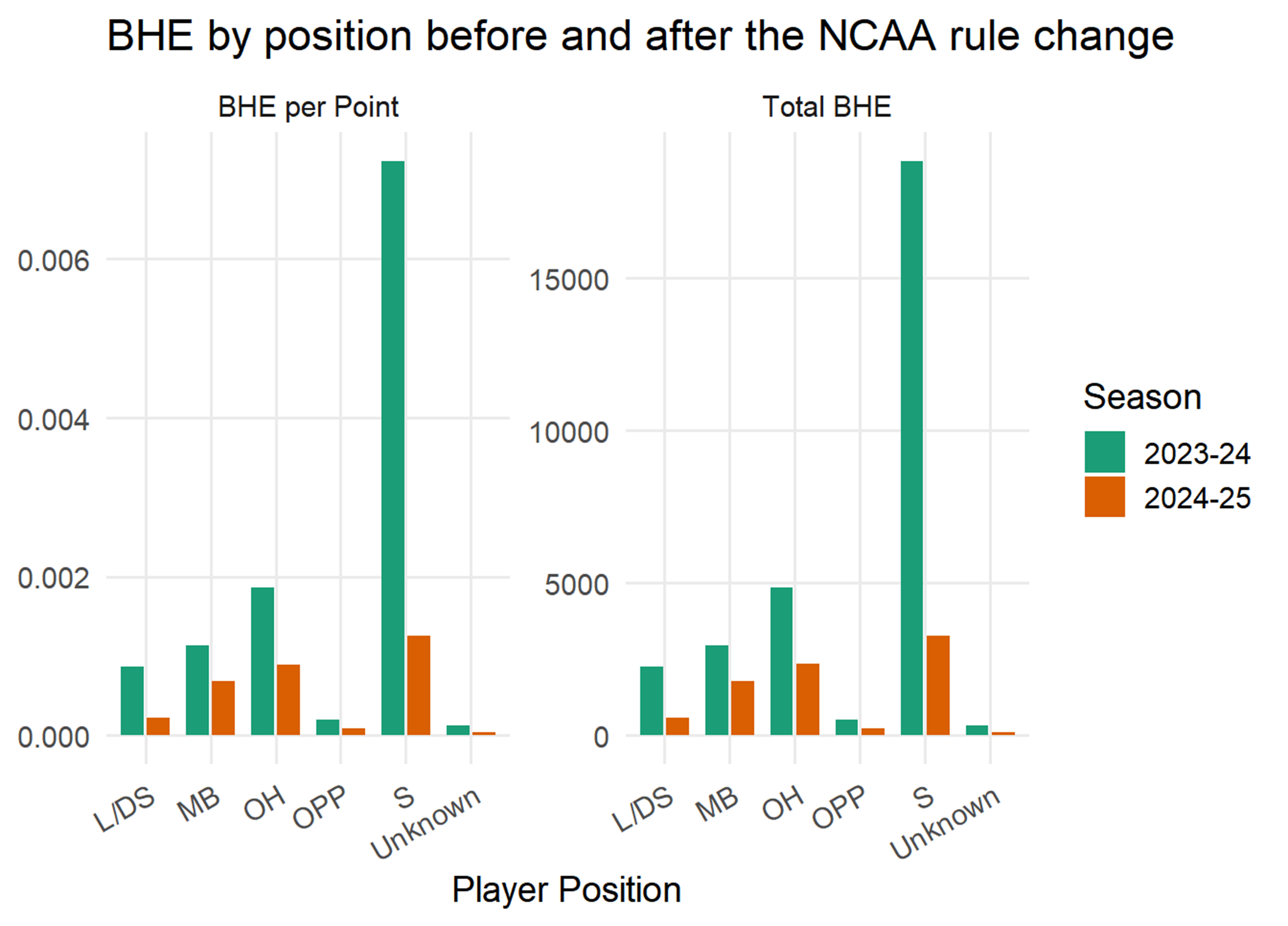
- Setters benefited most. Before the change, setters were by far the most vulnerable to ball-handling errors. Afterward, their call rate dropped by more than 80%. That makes setters now less likely than other positions to get a call – as shown in the bar chart.
- Referee home bias shrank. Away teams used to get called, on average, for more ball-handling errors than home teams – a sign of referee discretion influenced by crowd or context. That gap virtually disappeared.
- Rallies got a little longer. With fewer stoppages, the ball stayed in play longer, which adds continuity to the match.
- Competitive balance didn’t change. Matches didn’t tilt toward one side or another. The game flowed better without affecting outcomes.
Why it matters for coaches
This is one of the first large-scale, data-driven evaluations of a volleyball rule change. For coaches, it confirms what many suspected: reducing referee discretion on second contacts helps setters and makes the game smoother without upsetting balance. That means more chances to run offense, fewer frustrating whistles, and a fairer contest overall.
A note on the bigger picture
This is my first publication in sports science (my earlier academic work was in finance), and I hope it’s the start of a series of studies looking at our sport. I’ve got a few ideas for future papers in mind already, but if you have any thoughts on the subject, I’m happy to hear them.

2 Responses
I hear from setters (and more, from parents of setters) that the rule will lead to the slippage of setter skills. Is there any takeaway here that shows that’s the case or not? Or, is it not possible to infer from the things you looked at?
Michael – I’ve coached a lot of setters over the years, and in all that time I never specifically trained them not to double. Not doubling was simply a consequence of working on developing accuracy and consistency. So I don’t buy that argument at all.